Detour Art.
A curated guide to Artist-built Environments and other creative places.
region by region, coast-to-coast.
Dedicated to the sheer joy of outsider, folk, visionary, self-taught, vernacular art and environment discoveries found all along the back roads (and side streets).

What is an artist-built environment?
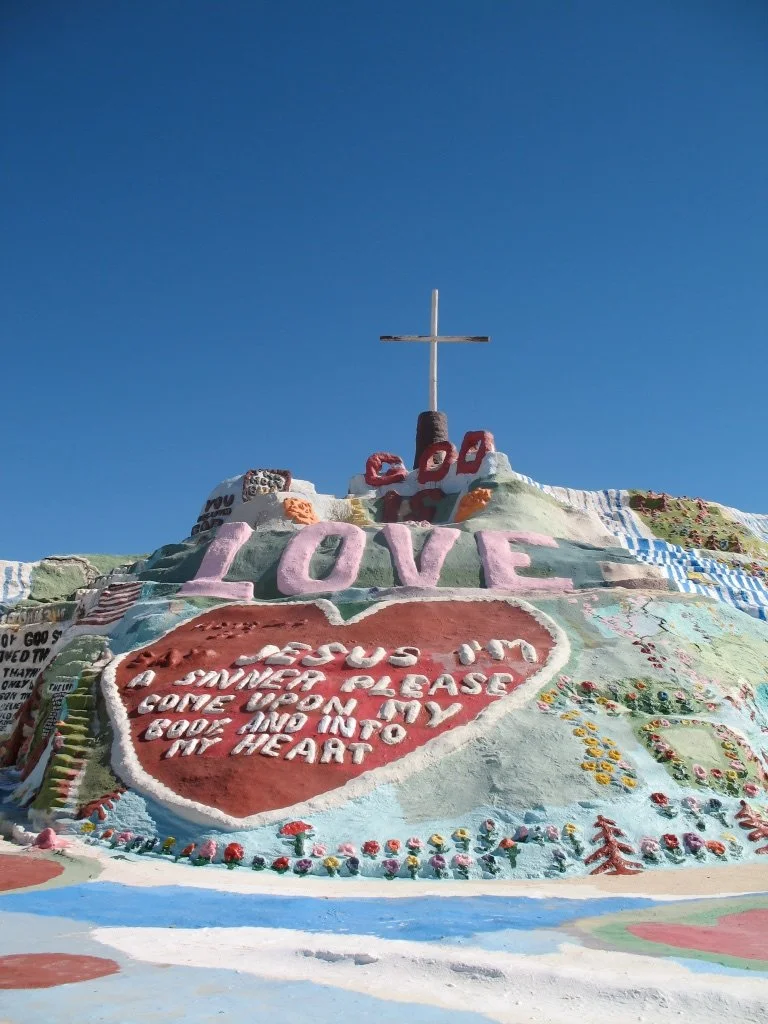
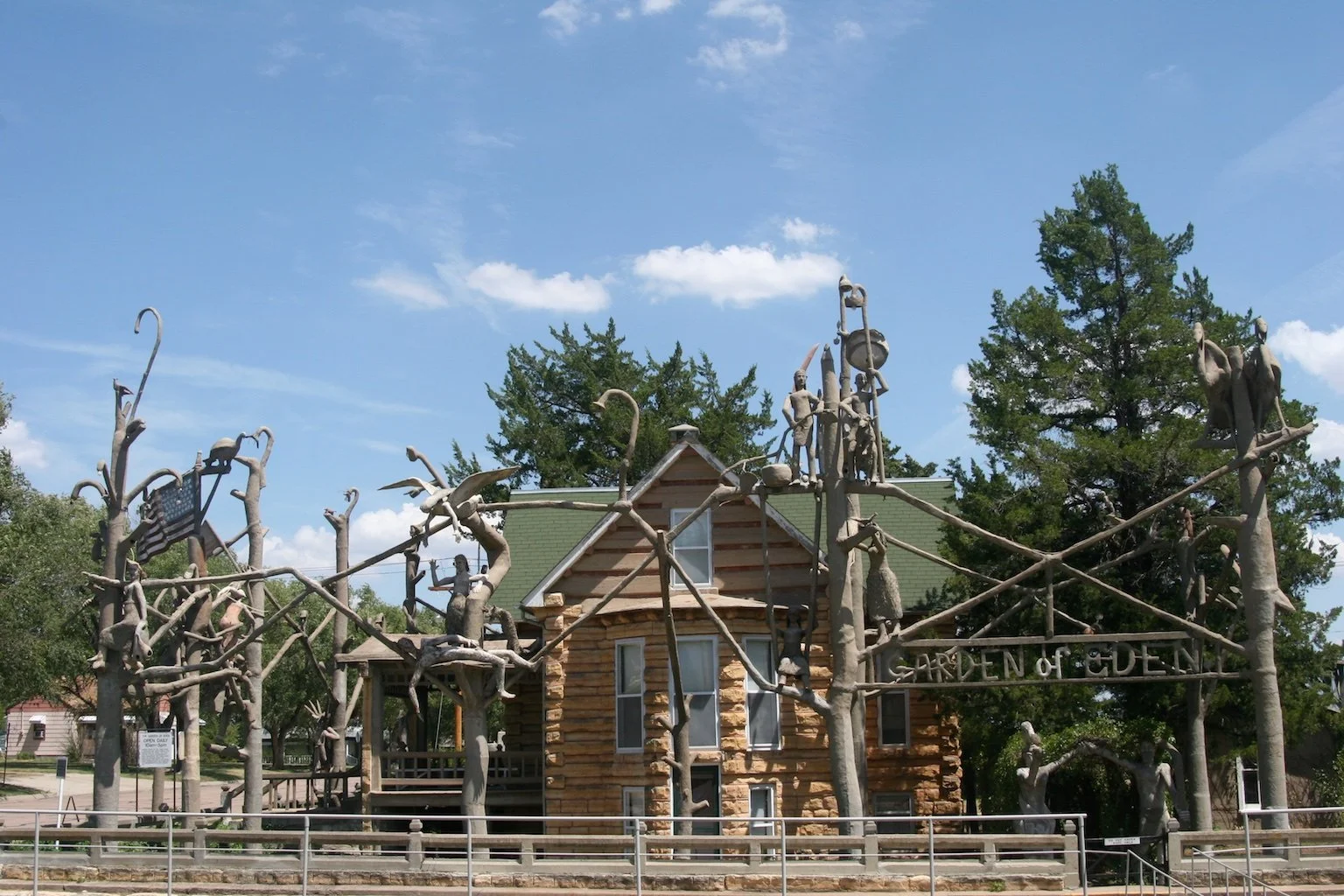
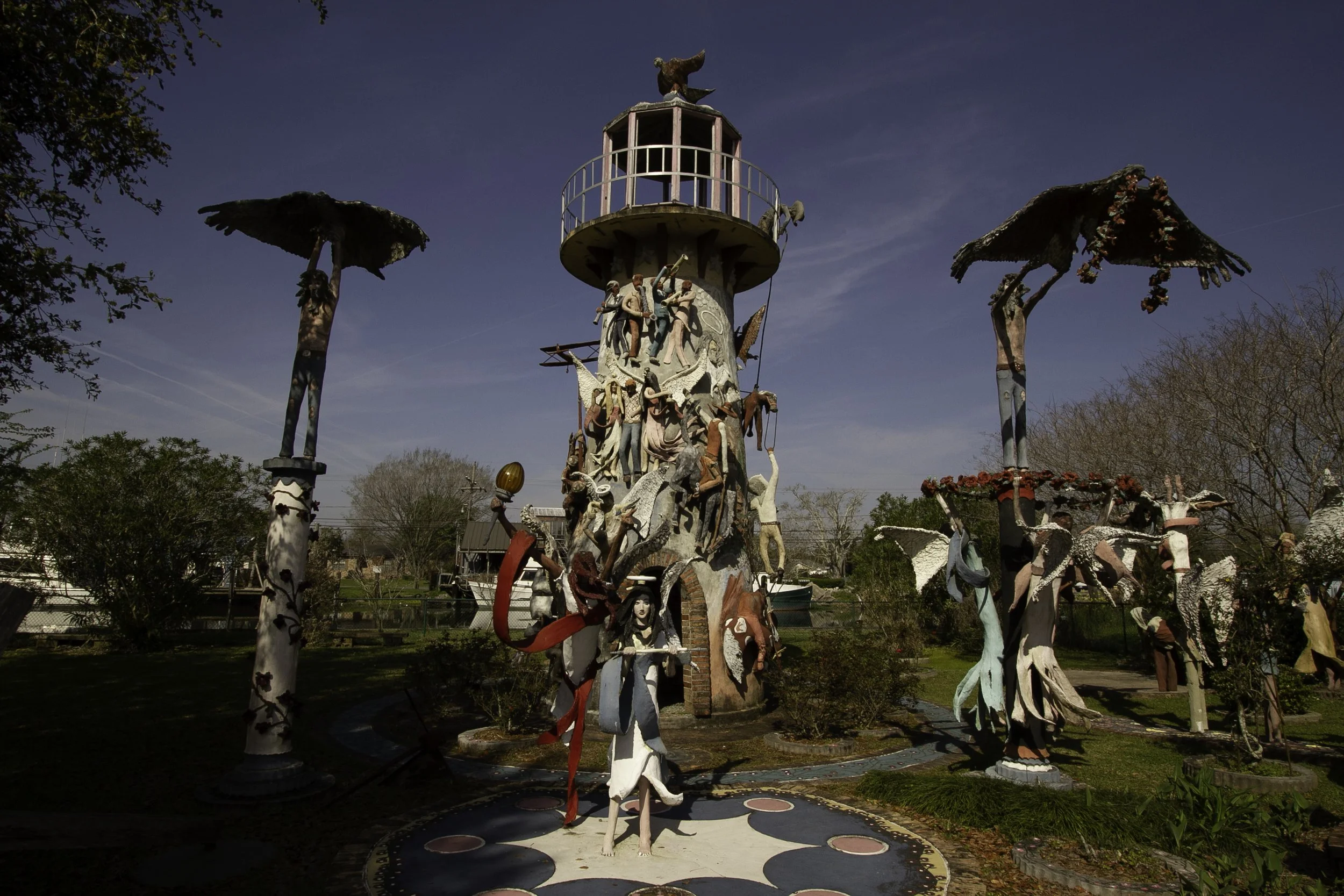
An artist-built environment is a space shaped over time by an individual — often self-taught — who transforms land, home, or property into a fully immersive work of art.
These places might look like visionary yards, handmade architecture, sculptural gardens, roadside installations, or entire landscapes reimagined piece by piece. They are usually built outside traditional art systems — without institutional backing, formal training, or commercial intent.
They are made because someone needed to make them.
Some are preserved. Some are fragile. Some have already disappeared.
Detour Art
Detour Art is my ongoing documentation of these environments across the United States.
I travel to these places, photograph them, and gather whatever history I can find — tracing origin stories when possible and returning when the light, the weather, or the story shifts. Everything here is hand-curated and personally documented.
Because many of these environments are vulnerable to weather, development, or neglect, documentation becomes part of preservation. I share my photography with S.P.A.C.E.S. (Saving and Preserving Arts and Cultural Environments) so researchers and restoration teams can track how sites evolve over time and, when possible, restore them closer to the artist’s original vision.
This work sits somewhere between field study, archive, and love letter.
Why these places matter
Artist-built environments expand our understanding of who gets to be called an artist. They challenge the line between art, architecture, and devotion. They remind us that creativity often happens quietly, stubbornly, and without permission.
Many were built over decades. Many were built alone. All deserve to be seen.
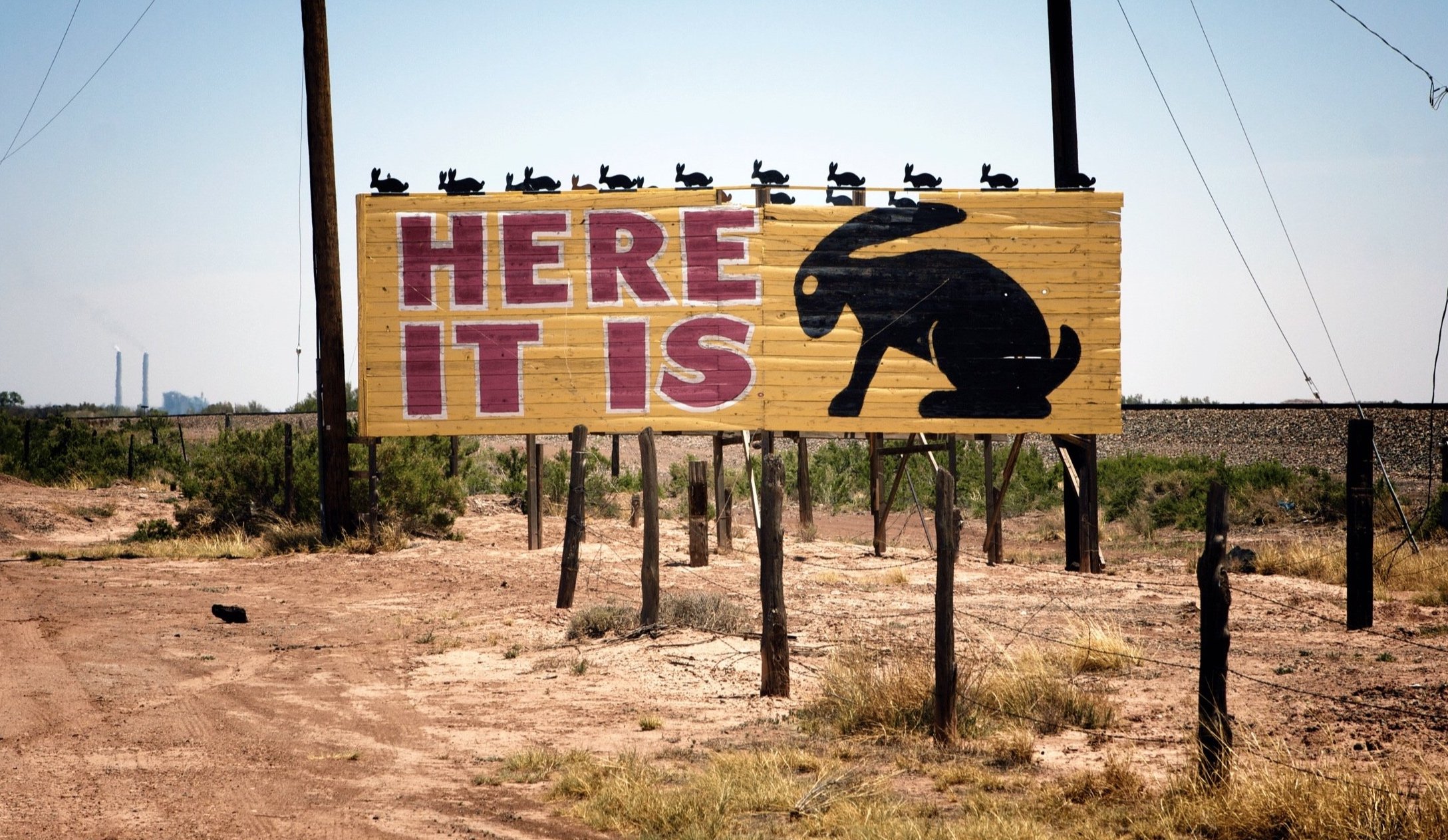


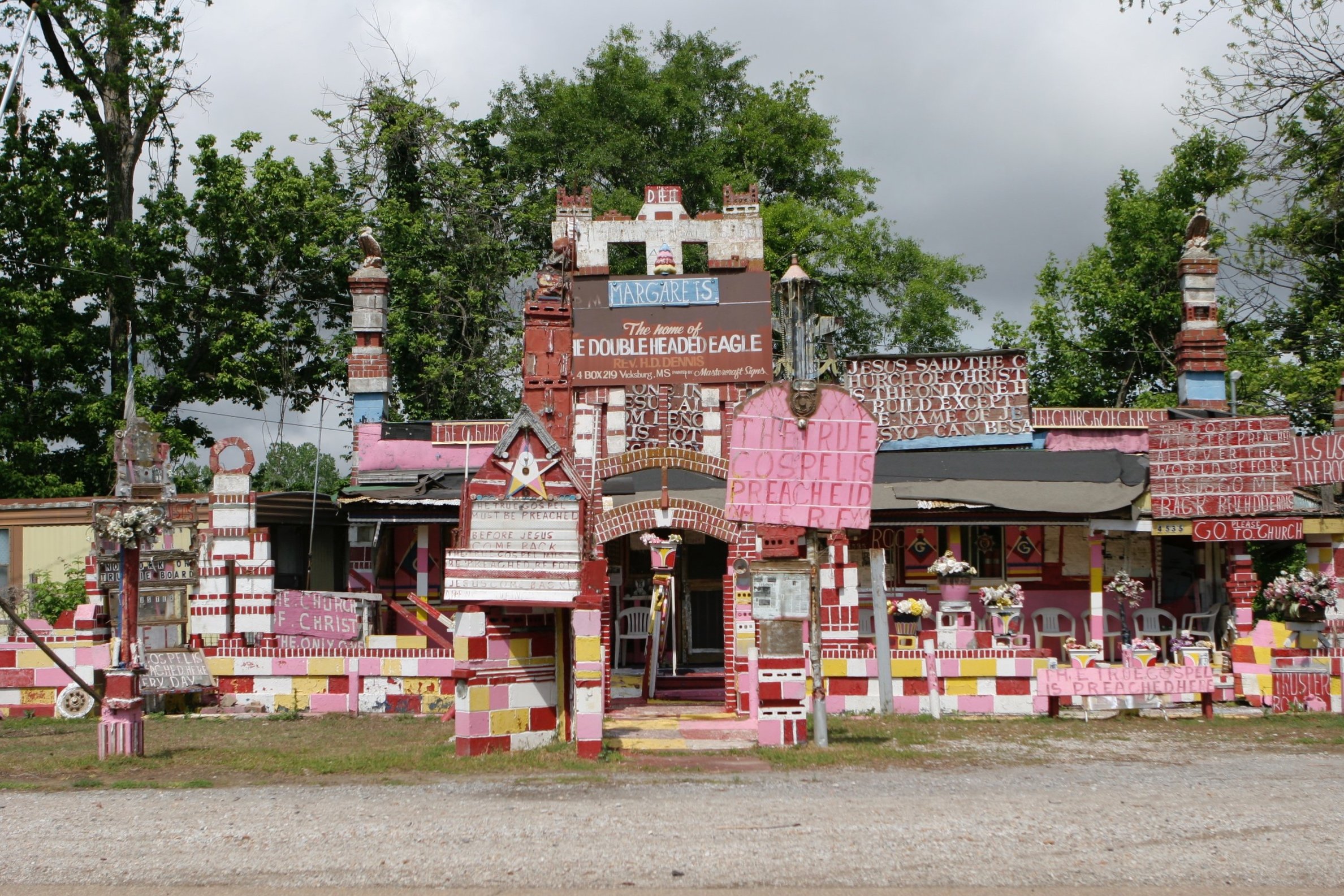

Artist-built Environments in the United States.
Note: Things change, so check first before arriving. When visiting art environments, remember they are usually on private property, so please be respectful and don’t trespass.
Hello, World!
Road stories.
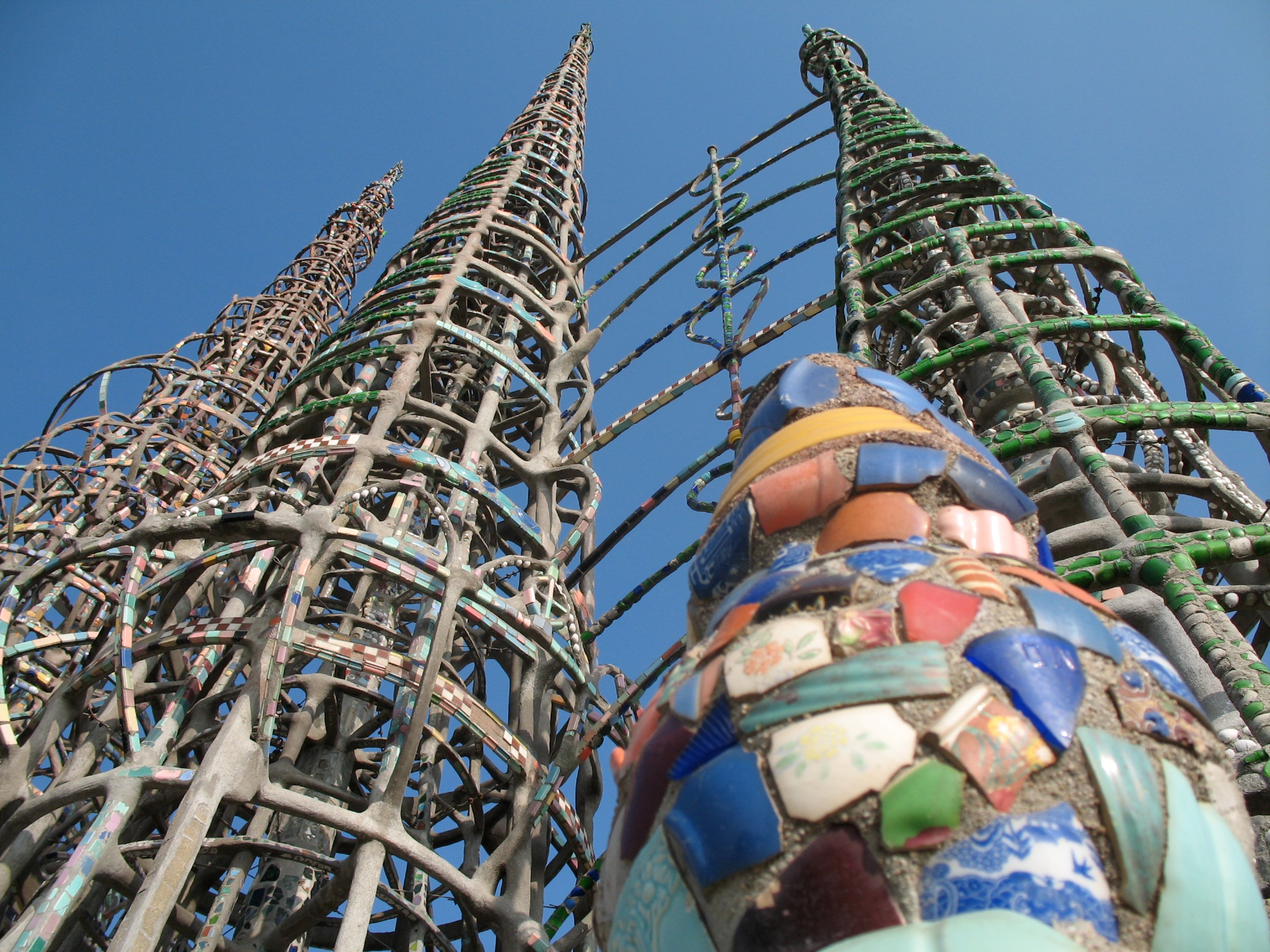
Watts Towers - Sabato (Simon, Sam) Rodia
This iconic artist-built environment of towers, structures, sculptures, pavement and walls were designed and built solely by Simon Rodia, an Italian immigrant construction worker over a period of 33 years from 1921 to 1954, in his own small yard near the train tracks in Watts. The collection of 17 interconnected sculptural towers, architectural structures, and individual sculptural features and mosaics, harken back to his upbringing in Nola, Italy and the celebration of the Feast of San Paolino.

Tile House + Tree of Life - Beverley Magennis
The Tile House is considered an Albuquerque landmark. All original mosaic art work that covers the home was completed by ceramic artist Beverley Magennis. She tiled the interiors and exteriors of homes, including her own, with tiles, pennies, and mosaics. Beginning in 1984 with a mosaic border around the doorway, eleven years later the house was covered inside and out.
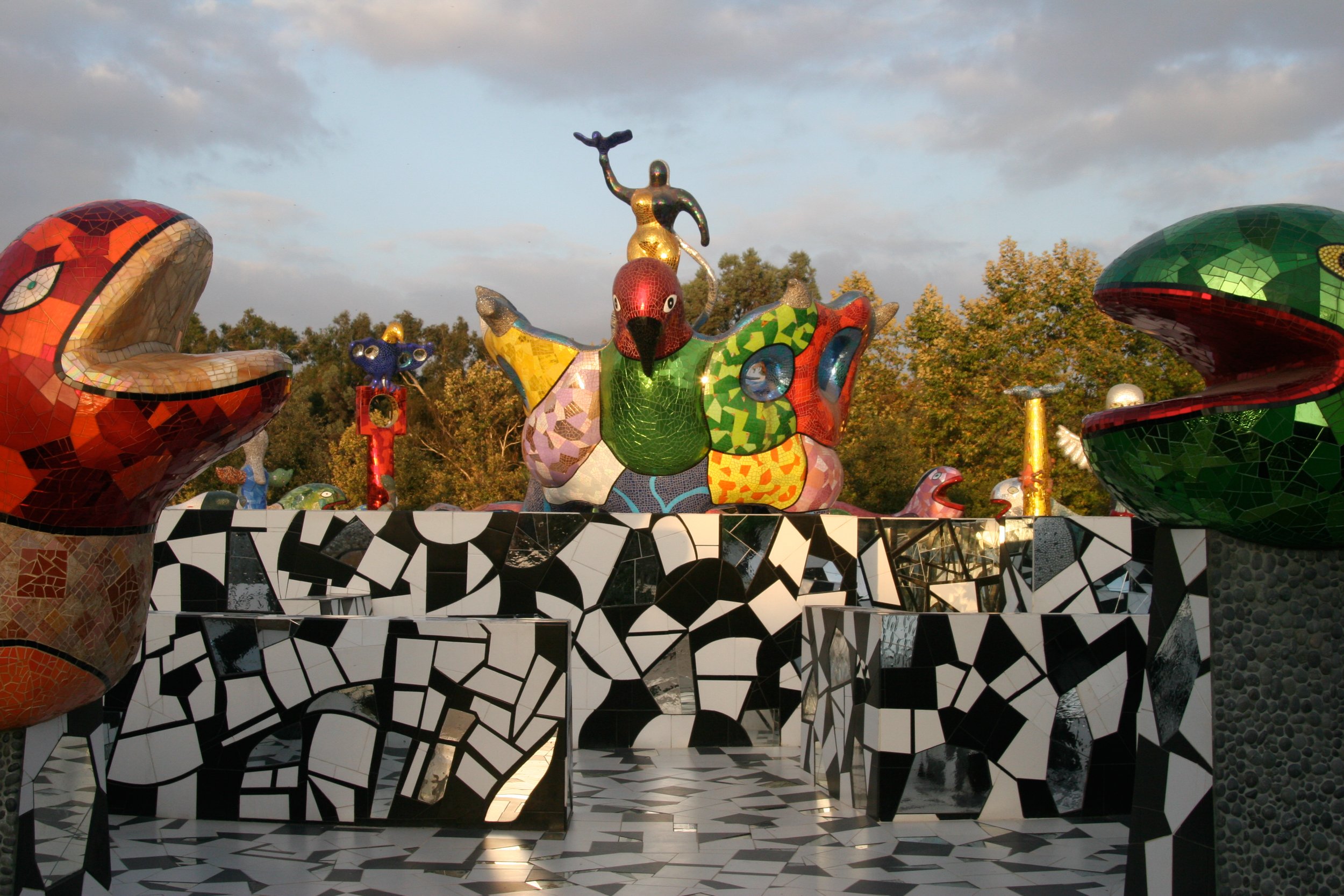
Queen Califia's Magical Circle - Niki de Saint Phalle
Snakes atop the walls, fabulous mosaics and a giant eagle with an Amazon warrior guiding it, Those are just some of the elements of the Magic Circle, created by Kiki de Saint Phalle, a French-born self-taught artist whose large scale sculptures earned her accolades in Europe. Influenced by figures such as Jean Dubuffet and Antoni Gaudi, she made her reputation in the Sixties with a series of giant female figures, the “Nana’s”.